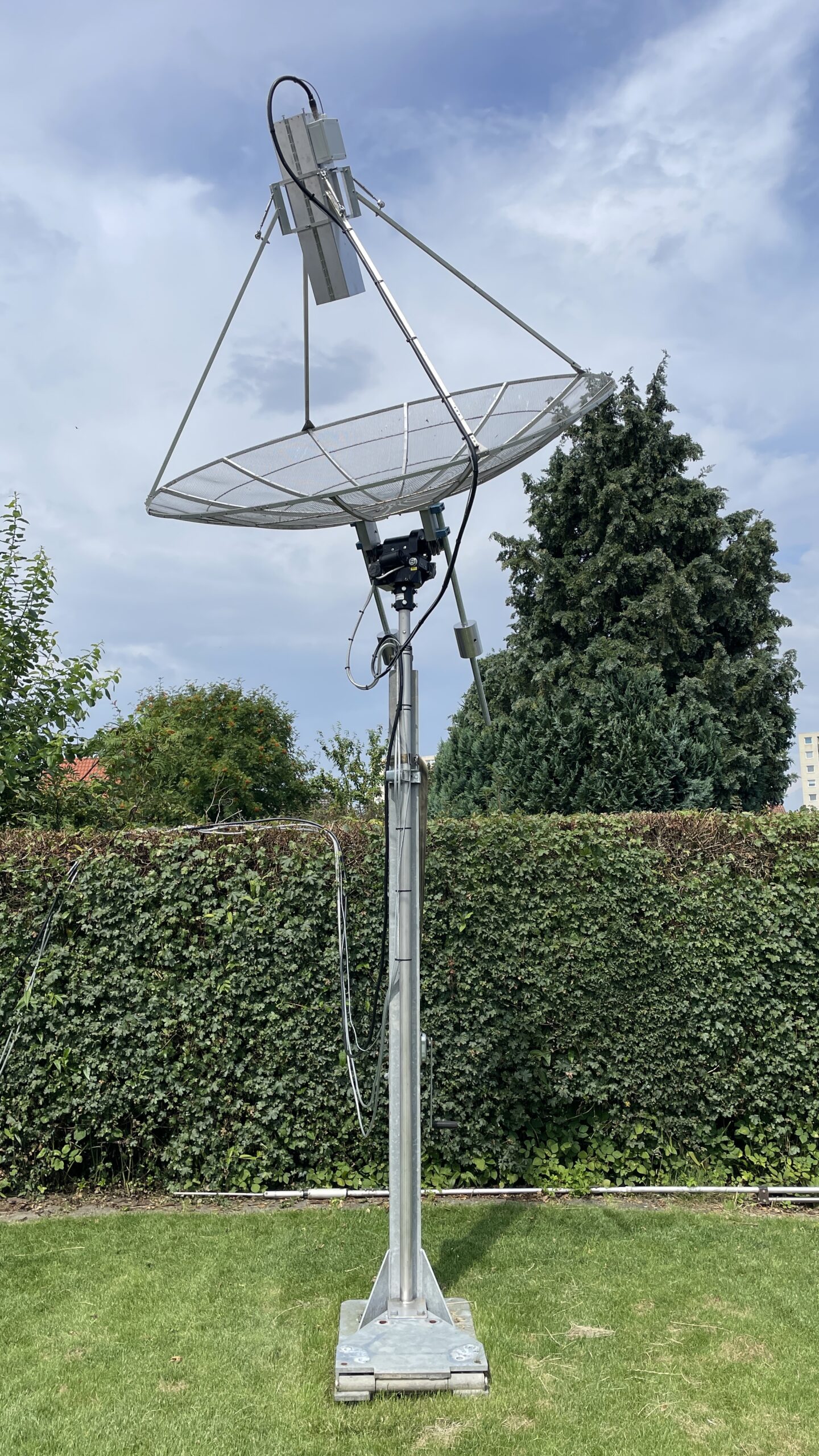
My interest and first experience with EME came through participating in EME weekends with the contest group OZ9KY, where we’ve been active for several years on both 144 and 1296 MHz EME. I’ve mainly operated on 1296 MHz, using a setup consisting of a 2.4 m dish, septum feed, LNA, and a 180 W PA.
I was quite content just taking part in OZ9KY’s EME weekends, but then a 1.9 m dish came my way, and that sparked the idea of building my own complete 1296 MHz EME setup.
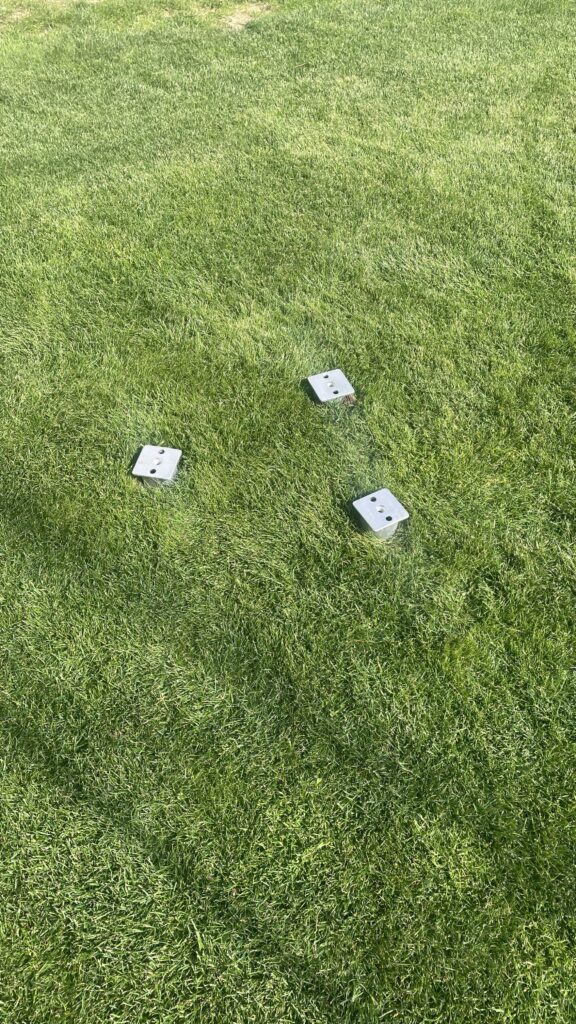
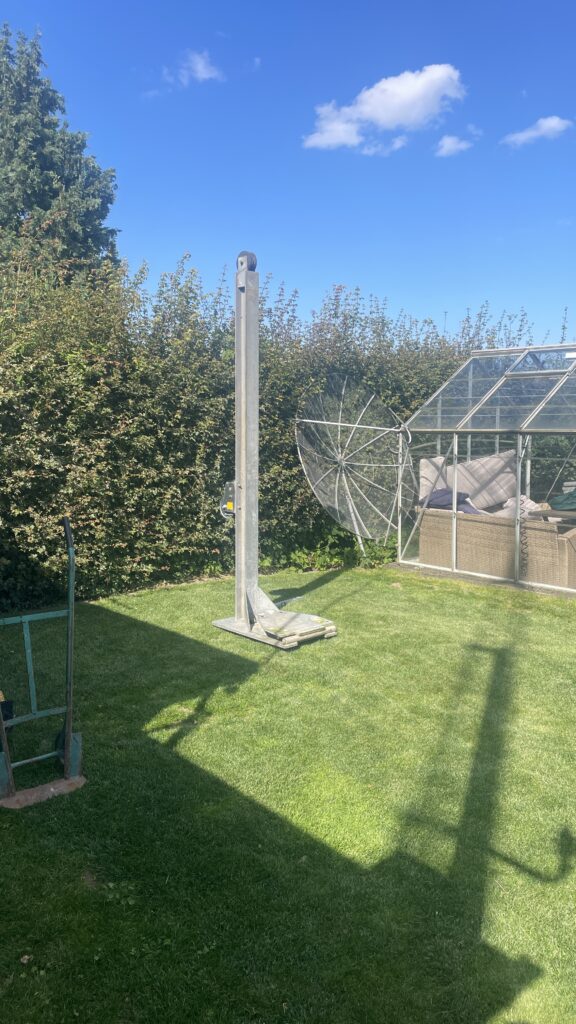
First, I needed a small mast for the dish. I decided to reuse my old tilting base from an 8 m lattice mast. To avoid pouring a concrete foundation, I opted to try ground screws—three pieces, Ø68 x 700 mm—which have proven sufficient so far. The mast has remained stable for over a year with both rotor and dish mounted.
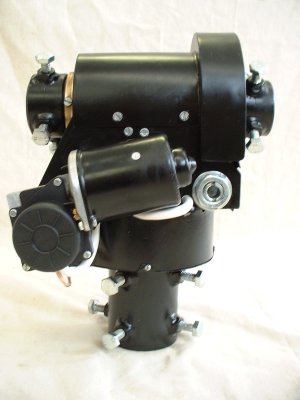
For rotation my dish I choose SPID RAS AZ & EL ROTATOR and MD-03 controler.
I made adjustments for pointing acurate aganist the moon in july, and it had followed the moon since without need for making corrections.
The dish is manufactured by RF HAMDESIGN and has an F/D ratio of 0.45, which is well-suited for a septum feed. I initially tried to purchase a feed from OK1DFC, but he never responded to my inquiries, so I ended up buying one from RF HAMDESIGN, including the mounting brackets for the dish.
When I installed the feed, I had trouble getting it to point steadily toward the center of the dish. I solved this by adding four turnbuckles, allowing me to adjust the feed’s direction precisely.
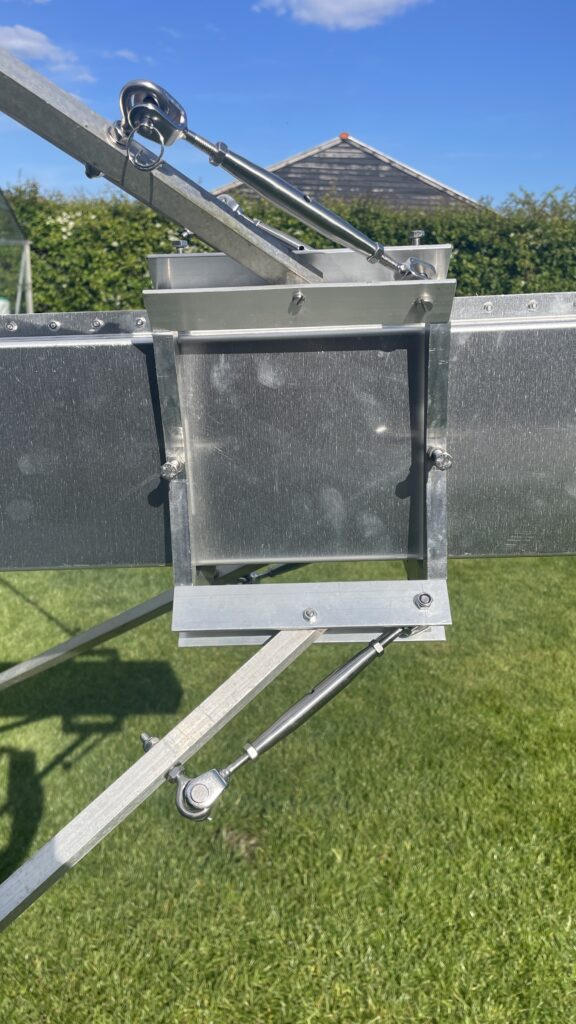
Adjusting elevation and azimuth wasn’t difficult. I aligned the dish vertically and estimated the azimuth by eye, as my property is perfectly aligned north-south. I then configured the PSTrotator software to track the sun and could see the shadow from the feed mount was very close to the dish’s center.
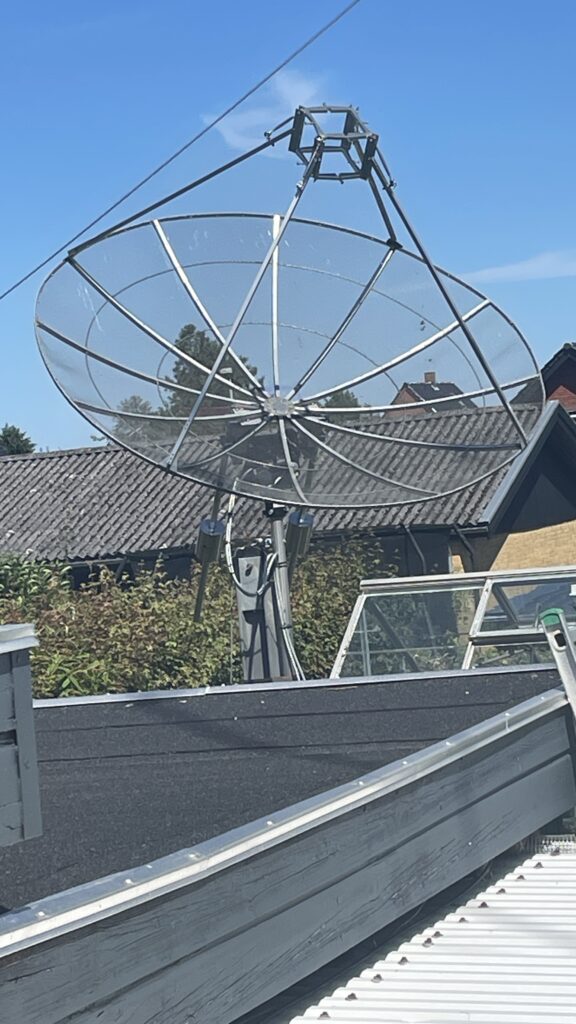
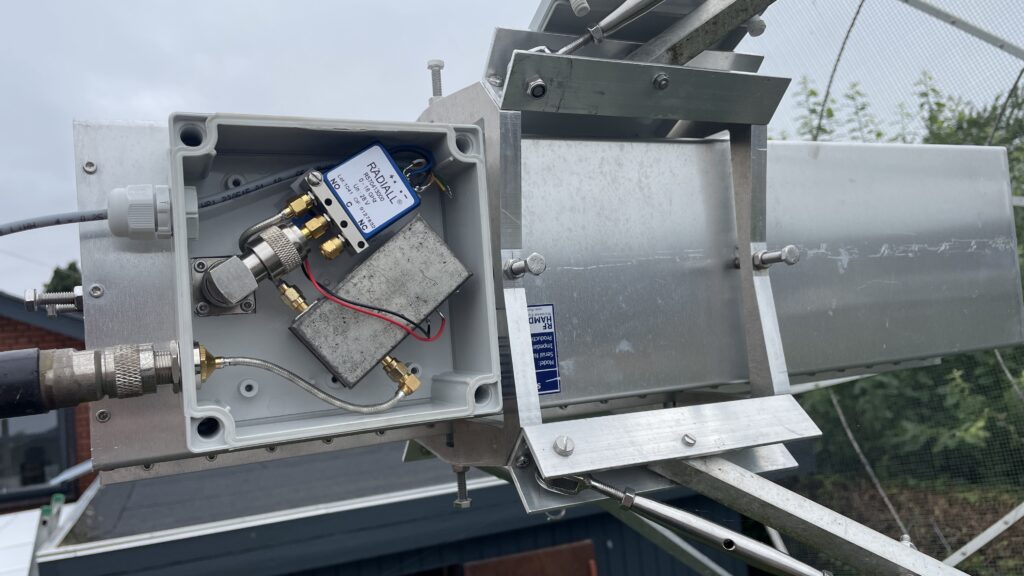
Next came the installation of the septum feed. I needed a solution to house the isolation relay and LNA, which ended up being a plastic box glued to the feed—see photo below.
Now came the exciting part: could I actually decode signals from the moon? I logged into the HB9Q EME chat and saw announcements about CQ calls and operating modes. I was thrilled to discover that I could indeed hear signals—and later confirmed that my reception was quite good compared to what other amateur radio operators were reporting.
I then learned that a Russian contest was coming up that weekend, and things moved quickly as I scrambled to get a basic transmit setup working. It was a bit improvised, with only 120–140 W output, but it turned out to be enough to make QSOs.
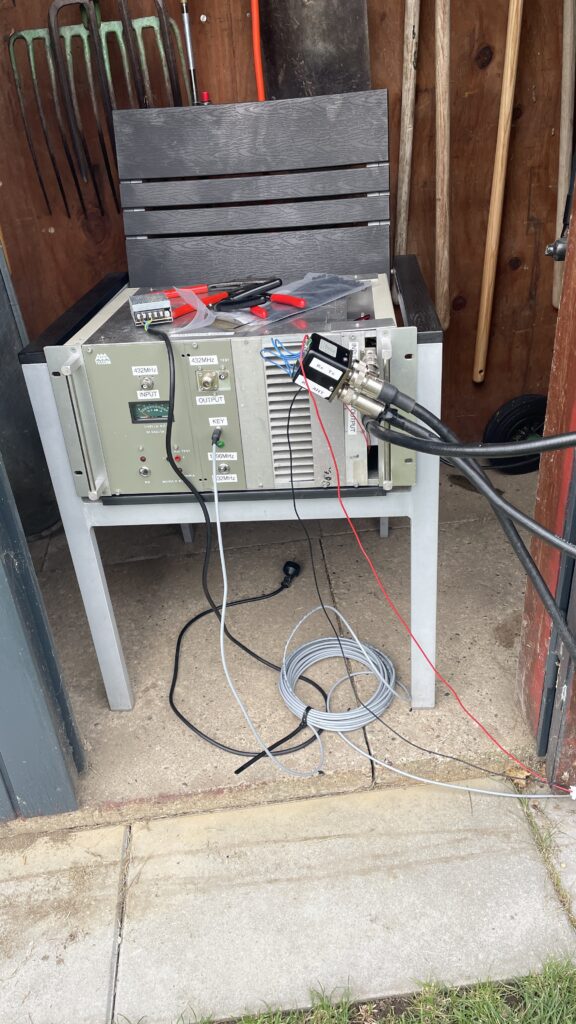
My first contact with the new setup was on July 26, 2025, at 07:45 UTC with OH3LWP. My signal was -24 dB at his end, and I received him at -18 dB. I made 27 QSOs that weekend—a wonderful experience!